Every health record your family has, finally in one place you can actually find.

MedStory turns scattered lab PDFs, prescription photos, and WhatsApp forwards into one searchable, chronological health record — for you, and for the people you care for. No more scrolling through chat history for a report from eight months ago.

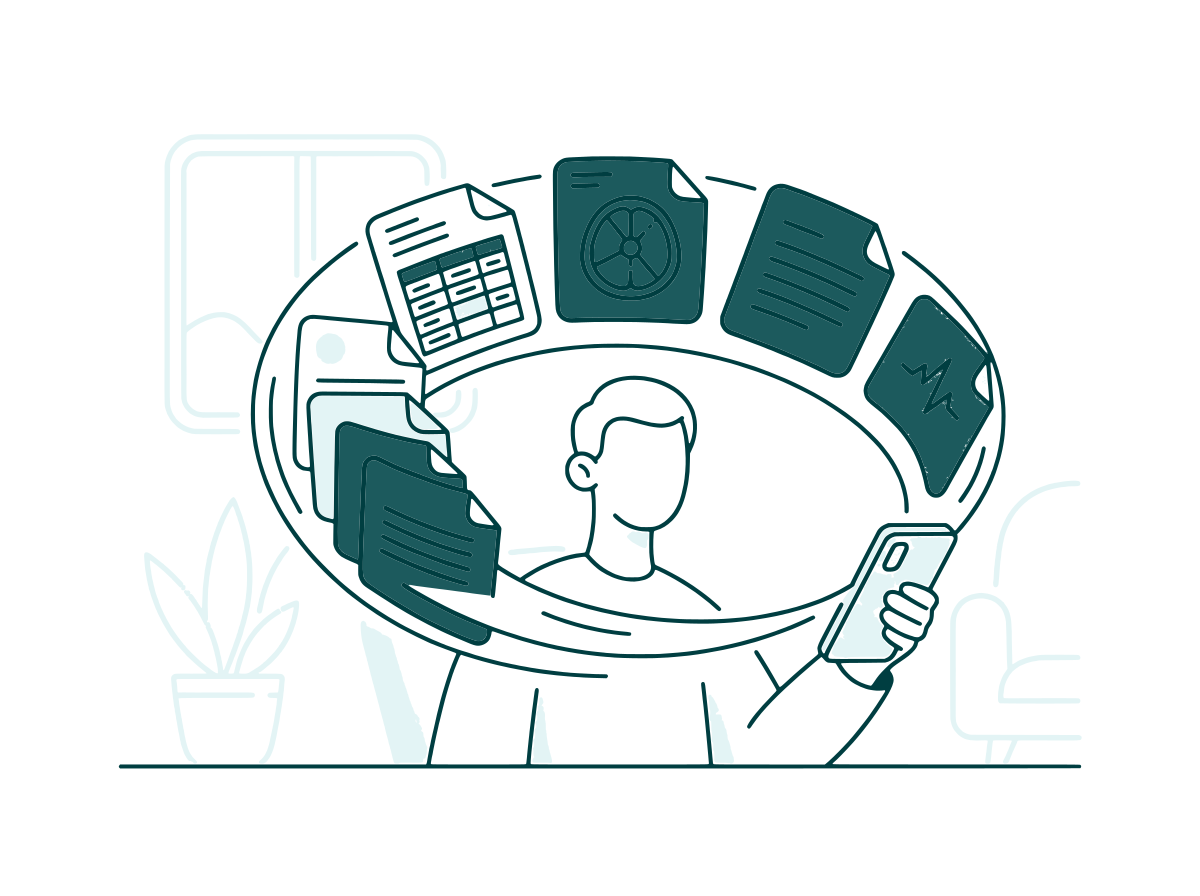
Illustration of a person holding a phone, encircled by scattered health records — lab results, forms, photos — being drawn together into one place
The problem

Your family's health records already live somewhere. It's just not anywhere useful.

If you've ever tried to pull up your mother's last three blood pressure readings before a doctor's appointment, you know the drill: scroll back through a WhatsApp family group, hope someone forwarded the right PDF, then try to remember the password — usually the last four digits of a registered mobile number. If that fails, there's the phone's photo folder, sorted by nothing in particular. And behind that, a drawer somewhere with the physical prescription chits that never made it into either.

This isn't a "some people are disorganized" problem. It's what happens when every clinic, lab, and pharmacy hands you a different format, on a different app, with no shared thread connecting them. There's no single place where a report becomes part of a record — it just becomes one more file to lose track of.
Core value

One vault. Every report. Actually searchable.

MedStory reads what you already have — a photographed prescription, a password-protected lab PDF, a scanned discharge summary — and turns it into structured, dated, searchable health data. Upload a report once, and it takes its place in a real chronological history: past visits, values over time, and the documents behind them, all in one vault you can actually search instead of scroll.

Built for how India's healthcare actually works

Most of your family's medical history didn't come from a hospital chain with a slick patient app — it came from a neighborhood lab, a family physician's clinic, a pharmacy counter. MedStory doesn't need your provider to use any particular system to make sense of your documents. If it's a lab report, a prescription, or a scan — a photo or a PDF — MedStory can read it and add it to the record.

Your vault, not a shared account

Every person gets their own individually-owned vault — not a joint family login where everyone sees everything. When you're helping a parent, they link their vault to yours; you see what they choose to share, and they keep control of their own record. It's built around who actually owns health information: the individual, not "the family account."

How it works

How it works, in three steps

1

Add a report

Photograph a prescription, upload a lab PDF, forward a scan — however the document already exists.

2

MedStory reads it

Reports are parsed into structured, dated entries — no manual data entry, no retyping values by hand.

3

Your history takes shape

Every report lands in a searchable timeline, so you can find a specific result or see how a value has changed over years, not just the last upload.

See the full walkthrough on How It Works
For every seat

Whichever seat you're in, MedStory fits

Managing a parent's health from a distance

Between clinic visits, pharmacy runs, and the WhatsApp threads that pile up around them, keeping track of a parent's health can feel like a part-time job with no dashboard. MedStory gives you one place to see their history — the reports, the trends, the things worth flagging before the next appointment — without taking over their account or their data.

Read more for family caregivers

Keeping your own long-term health story straight

If you're the one who's moved cities, changed clinics, or simply accumulated a decade of scattered reports, MedStory rebuilds the connective tissue between them — one vault that holds your history as it actually happened, searchable whenever you need it, not just when you remember which folder it's in.

Explore your personal vault

Privacy that's actually structural, not a settings toggle

Your health information is yours. MedStory doesn't sell it, doesn't advertise against it, and doesn't monetize it in any form — that's not a policy we could quietly change later, it's how the product is built. Sharing between family members happens because you choose to link a vault, not by default. Consent controls are designed around DPDP Act principles from the ground up, not bolted on afterward.

FAQ

Frequently asked questions

No — and that's intentional. Every person has their own individually-owned vault. Family members link vaults to share visibility with each other; there's no single shared login where everyone's records live under one account.

Join the waitlist

MedStory is currently in closed beta. Join the waitlist and we'll let you know as spots open up — no spam, no sharing your email with anyone else, just an update when it's your turn.

We'll only use your email to notify you about MedStory access. See our Privacy Policy.