For the Child Who's Become the Family's Record-Keeper

You're the one who gets the PDF forwarded to you at 11pm. You're the one who knows the password is the last four digits of your mother's registered mobile number. You're the one three siblings call when nobody can find last year's blood work before Sunday's appointment. MedStory gives your parent's medical history a real home — one that isn't a WhatsApp group, a camera roll, or a drawer at their house that only they know how to search.
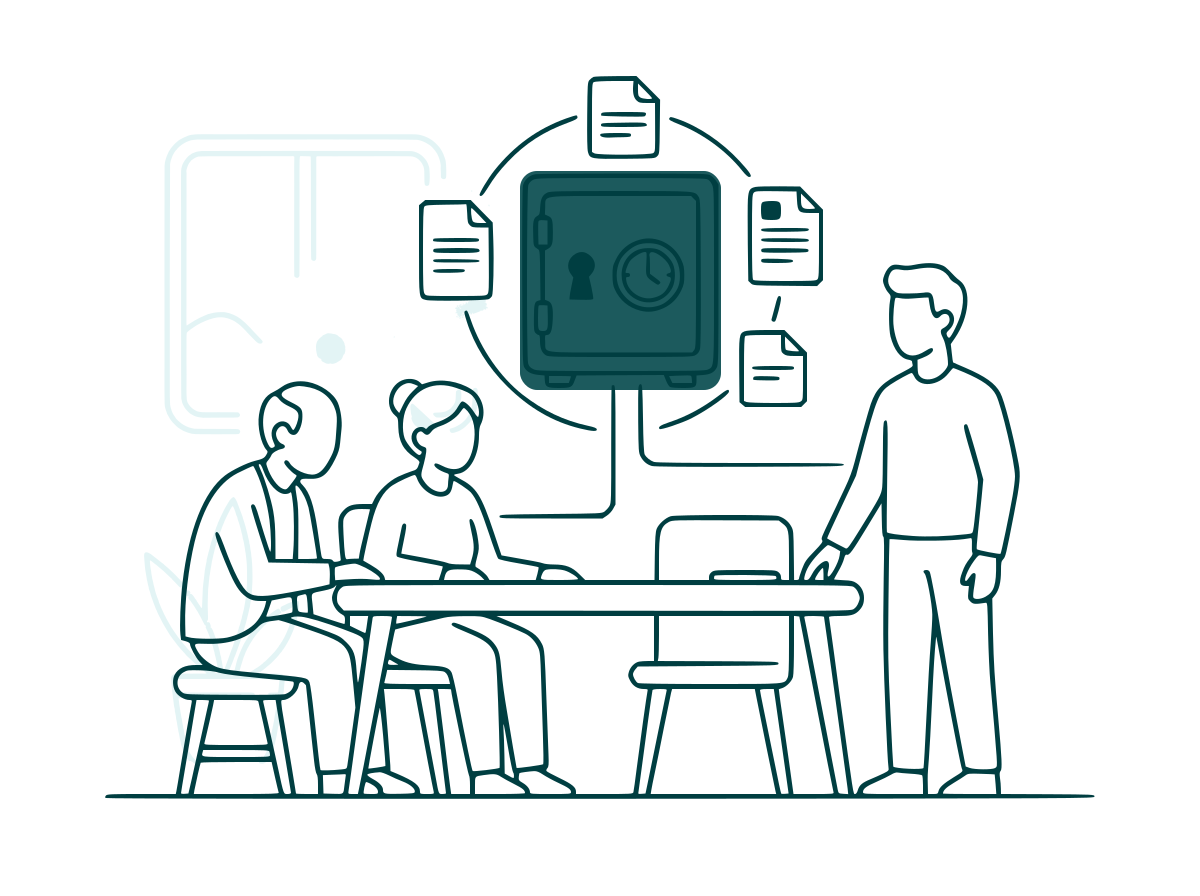
Illustration of a family at a table with a caregiving relative standing by, their health records connected to one shared vault
The problem

The Way It Works Right Now Isn't Working

If you're managing a parent's health from another city — or another country — you already know the routine. A report gets scanned at a local lab and forwarded into the family WhatsApp group as a password-protected PDF. Someone downloads it, forgets to rename it, and it disappears into a camera roll next to birthday photos. The physical prescriptions and diagnostic printouts stay behind in a drawer at your parent's house, sorted by nobody, findable only by the person who put them there.

This works fine until it doesn't. A specialist asks for the last three years of a parameter and nobody can produce it. A new doctor has no idea what the previous one prescribed, because nothing travels between them — so the visit starts from zero. Your parent shows up at a hospital and can't say what they take or why, so the intake asks you, and you're not always the one in the room.

None of this is because your family isn't organized. It's because there was never a system built for what you're actually doing — tracking one person's medical history, across providers and time, from a distance.

The right model

Your Parent Keeps Their Own Vault. You Get Linked Access.

Why a "shared family account" is the wrong model

Most digital health record tools built for this problem default to a single shared login — one account, one owner, everyone else logging in as that person or through them. It's a convenient model to build. It's not the right one. Your parent's medical history belongs to your parent. Even when you're the one doing the coordinating, they shouldn't have to hand over their entire record to get help managing it. MedStory works differently: your parent gets their own vault, under their own name, that they own. You get access to it through a consent-based link — not a login you hold on their behalf.

What linked access actually lets you do

Once your parent links you as a caregiver, you can open their reports, prescriptions, and timeline without waiting for a forward — no more "did the report come yet?" text to the family group. If siblings are also involved, each can be linked the same way, working from the same underlying record instead of whoever has the latest PDF. Your parent stays in control of the link itself — they decide who's connected to the vault, and can unlink that access whenever they choose.

The moment that matters most

Ready Before You Need It

The moment this matters most is the one you can't schedule for.

A fall, a sudden admission, an unfamiliar hospital — and someone at the desk asking questions your parent can't answer and you don't have the paperwork for. Current medications, allergies, recent scans, the name of the cardiologist who saw them eight months ago in a different city.

In that moment, "it's somewhere in the WhatsApp group" is not a plan.

With MedStory, your parent's medical history is organized and current before an emergency happens, not reconstructed during one.

What moves in

What Moves Into MedStory

From WhatsApp threads and camera rolls

Every password-protected PDF, every photo of a printed report, every scan someone forwarded and nobody filed — MedStory reads it and turns it into structured, dated data: your parent's health history, not a folder of files you have to remember the contents of.

From the drawer of prescription chits

The physical prescriptions and handwritten notes sitting at your parent's house don't have to stay paper-only. Photograph them once and they join the same chronological record as everything else.

FAQ

Common Questions from Caregivers

No — reports can move in through the same photo-and-forward habit your family already has; your parent doesn't need to operate the app for their vault to stay current.

Start Your Parent's Vault

You're already doing the work of keeping track. Give it a system that doesn't depend on you being the one holding every file.

We'll only use your email to notify you about MedStory access. See our Privacy Policy.